

Why Commercial Fishing Insurance is Your Lifeline
Commercial fishing insurance is specialized coverage designed to protect fishing vessel owners and operators from the unique risks of maritime operations, including vessel damage, crew injuries, third-party liability, and equipment loss. As one of the world’s most dangerous occupations, commercial fishing requires adequate insurance to protect your livelihood, comply with regulations, and ensure business continuity after a catastrophic event.
Key Components of Commercial Fishing Insurance:
- Hull & Machinery (H&M) – Covers physical damage to your vessel, engine, and permanently attached equipment
- Protection & Indemnity (P&I) – Provides liability coverage for crew injuries, pollution, third-party property damage, and wreck removal
- Fishing Gear & Equipment – Protects nets, traps, pots, and other specialized gear
- Catch Insurance – Compensates for loss or spoilage of your catch
- Loss of Fishing Time – Covers lost income when your vessel is out of commission
Commercial fishermen rely on their ability to locate and gather fish—a continuous gamble of profits versus expenditures. The potential for devastating loss is incredibly high in the marine market. A single storm can sink a vessel, a fire spreading from another boat can destroy your investment, or an injury to a crew member can result in a multi-million dollar lawsuit under maritime law.
The global fishing fleet consists of around 4.5 million vessels, yet only an estimated 450,000 were covered by marine hull insurance in 2020. This massive gap in coverage leaves countless fishing operations vulnerable to financial ruin. Many fishermen forego insurance to offset rising operational costs, but operating without proper coverage can be far more expensive than the policy itself.
Whether you operate a small outfit with just a few vessels supplying fresh seafood to local markets, or you’re the proprietor of a large fleet fishing internationally, understanding the essential coverages, regulatory requirements, and factors that influence your policy is crucial for protecting your business and ensuring you can weather any storm—literal or financial.
Why Commercial Fishing Insurance is Non-Negotiable
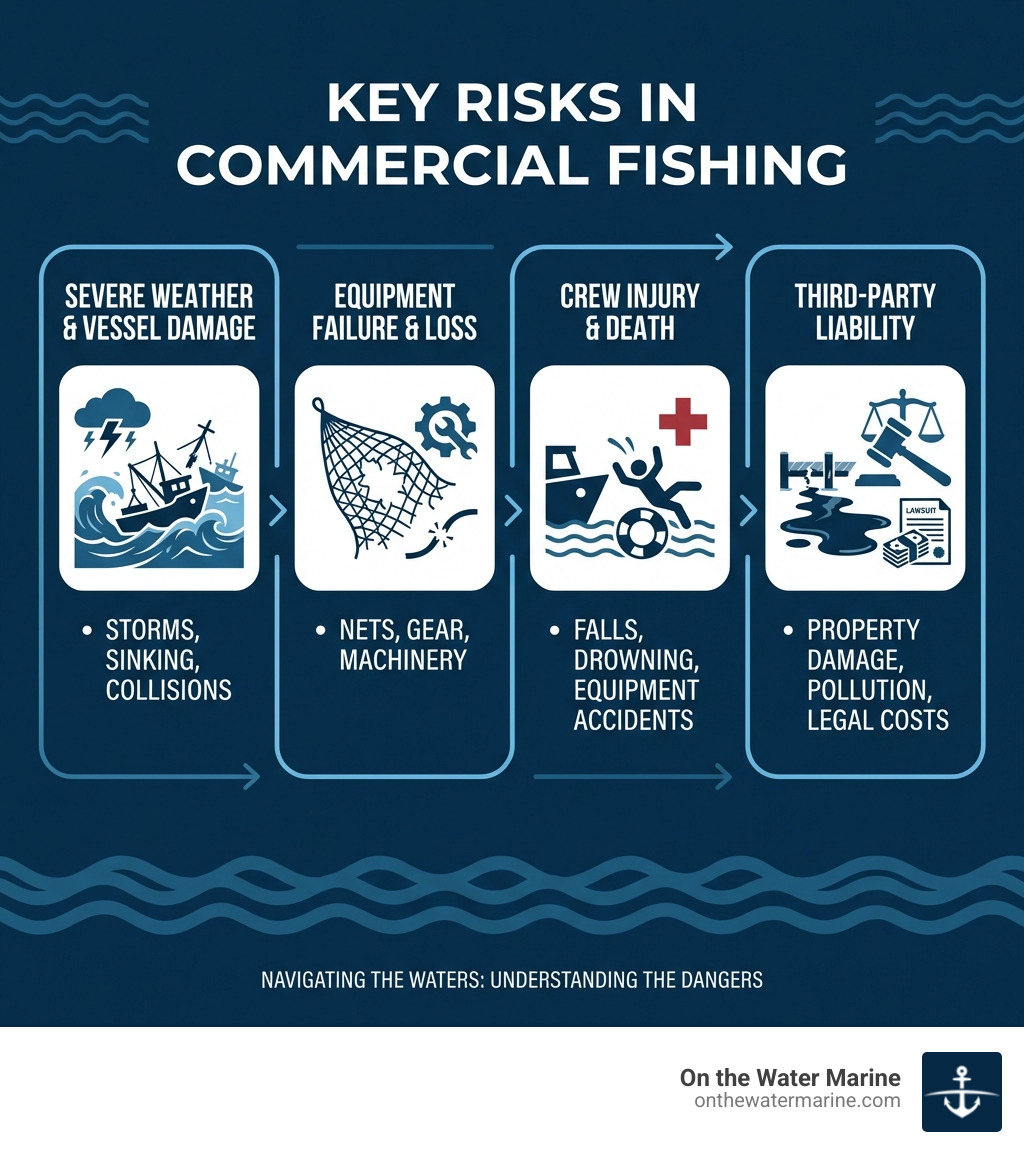
The sea is a beautiful yet unforgiving workplace. Commercial fishing is a demanding, high-stakes enterprise with daily risks. From severe weather and equipment failure to vessel sinking and devastating fires, the exposures are immense. The potential for total loss is extremely high in the marine market. We’ve seen fishing vessels damaged by fire spreading from another vessel, or sinking due to the ferocity of a storm. These are not isolated incidents; they are inherent dangers of the trade.

Consider this: commercial fishing is consistently rated as one of the most dangerous occupations globally. This isn’t just about the physical dangers; it’s also about the financial vulnerability. Without adequate commercial fishing insurance, you’re exposed to out-of-pocket costs for equipment, machinery, and hull repairs, or even the complete loss of your vessel. Opting out of hull insurance, for example, can leave your boat in disrepair for longer, interrupting your business and costing you potential revenue. The Food and Agriculture Organization of the United Nations (FAO) recognizes the crucial role of insurance in fishing safety, providing financial compensation for losses or damages caused by events beyond the control of the insured. Insurance is truly a critical safety net, allowing for business continuity even after an unexpected event. It’s about ensuring your livelihood can continue, no matter what challenges the ocean throws your way. You can learn more about the role of insurance in fishing safety.
The High Cost of Liability: Lawsuits and Maritime Law
A significant reason commercial fishing insurance is non-negotiable is the immense financial exposure from liability claims, especially concerning crew members. Unlike land-based occupations, commercial fishermen are often covered by specific maritime laws, such as the Jones Act and the doctrine of “Maintenance and Cure,” rather than traditional workers’ compensation.
“Maintenance and Cure” is a historical maritime law obligation that requires vessel owners to cover the medical costs and living expenses for a crew member who is injured or becomes ill while in the service of the boat, regardless of fault. This obligation continues until the crew member recovers or is determined to be permanently disabled. Awards for maritime injuries have increased dramatically over the decades, with permanent disabilities being the most costly. We’ve seen cases where a deckhand hit by deck tackle became paraplegic, resulting in a multi-million dollar court award.
Beyond crew injuries, you face risks like:
- Negligence Claims: If your captain or crew’s actions (or inactions) lead to an accident, you could be held liable. Courts often interpret “operator negligence” and “vessel unseaworthiness” broadly, extending liability beyond direct accidents.
- Third-Party Property Damage: Collisions with other vessels, docks, or marine structures can lead to significant repair or replacement costs for which you could be held responsible.
- Wreckage Removal: If your vessel sinks, you might be legally obligated to cover the costly process of removing the wreckage.
- Pollution Liability: An oil or fuel leak from your vessel can lead to massive cleanup costs, environmental fines, and lawsuits. The industry faces high environmental impairment exposure due to potential water pollution.
These potential liabilities underscore the need for comprehensive Protection & Indemnity (P&I) coverage, which we’ll discuss further. To understand more about managing these risks, explore more about marine business liability.
Beyond Financial Protection: The Broader Benefits
While financial protection is the primary driver, the benefits of commercial fishing insurance extend much further, securing your entire operation and peace of mind.
- Peace of Mind: Knowing you’re adequately covered allows you to focus on your fishing operations, rather than constantly worrying about potential disasters.
- Access to Credit: Lenders often require mortgaged vessels to be insured, at least to the amount owed. Having proper insurance can increase your access to institutional credit and investment, which is vital for business growth and upgrades.
- Fulfilling Legal Requirements: In many jurisdictions, and for specific operations (like carrying passengers), certain insurance coverages are legally mandated. Non-compliance can lead to severe penalties, fines, or even vessel detention.
- Protecting Personal Assets: In the event of a catastrophic liability claim, adequate insurance can shield your personal assets from being seized to cover damages.
- Enhancing Safety Culture: Insurance providers often scrutinize safety track records, maintenance logs, and crew training. Maintaining high safety standards not only reduces your risk but can also positively influence your insurance rates. Chubb Canada, for example, emphasizes sophisticated loss control expertise through marine surveyors and engineers.
- Business Investment Protection: Your fishing vessel, specialized equipment, and catch represent a major investment. Insurance protects this investment, preventing business failure due to unforeseen financial loss. It ensures your business can continue operations without significant disruption.
Deconstructing Your Policy: Core and Optional Coverages
Understanding the different components of a commercial fishing insurance policy is crucial to ensuring you have the right protection. It’s not a one-size-fits-all solution; policies can be custom to specific needs.
Essential types of commercial fishing insurance
The foundation of any robust commercial fishing insurance policy typically rests on two pillars: Hull & Machinery and Protection & Indemnity.
- Hull and Machinery (H&M): This is the bread and butter for protecting your physical assets.
- Physical Vessel Damage: H&M covers the repair or replacement of your vessel itself, including the hull, deck, and permanently attached equipment, in the event of perils like sinking, collision, fire, grounding, capsizing, or inclement weather.
- Engine and Equipment: It also extends to your engine, generators, navigation electronics, and other vital machinery. Some policies even cover major breakdowns due to latent defects (a hidden flaw that causes damage).
- Salvage Expenses: Should your vessel need to be salvaged after an incident, H&M can cover these often-substantial costs.
- Protection & Indemnity (P&I): This is your crucial liability shield. P&I is considered the best type of comprehensive insurance coverage for commercial fishermen.
- Crew Liability: As discussed, P&I is vital for covering “Maintenance and Cure” obligations and defending against Jones Act lawsuits arising from crew injuries, illness, or death.
- Third-Party Liability: It protects you from claims related to property damage or personal injury to people not on board your vessel, such as other boats, docks, or swimmers.
- Pollution: P&I covers costs associated with environmental damage, such as oil spills or fuel leaks, including containment, cleanup, and related fines or lawsuits.
- Wreck Removal: If your vessel becomes a wreck, P&I covers the legal obligation to remove it.
- Investigation and Defense Costs: It also covers the legal expenses incurred in investigating and defending claims and lawsuits, which can be substantial even if you’re not found liable.
While $250,000 is often considered standard P&I coverage, many skippers are now opting for $1 million or more, often through excess coverage, recognizing the escalating costs of maritime claims. For a deeper dive into what typical boat insurance covers, you can check out what does boat insurance typically cover?.
Specialized and Optional Endorsements
Beyond the core H&M and P&I, a truly comprehensive commercial fishing insurance policy will often include specialized endorsements to cover the unique aspects of your operation. We understand that no two commercial fishing vessels or captains are the same, which is why customizable packages are so important.
Here are some additional coverage options you should consider:
- Catch Insurance: This compensates you for the value of your fish or shellfish if it’s damaged, spoiled, or lost during transport or before it reaches the market. Given that fish and shellfish are highly perishable, this can protect against significant financial loss.
- Nets & Gear Coverage: Your specialized fishing equipment—nets, traps, pots, lines, electronics, GPS, radars, fish finders, safety gear, and spare parts—represents a substantial investment. This coverage protects against loss or damage to these critical “tools of the trade,” whether they’re on land, in transit, or at sea.
- Skiffs & Tenders: If you use smaller boats in conjunction with your main fishing vessel, this coverage ensures they are also protected against damage or loss.
- Loss of Fishing Time (or Loss of Income): If your vessel is out of commission due to a covered peril, this coverage can help replace lost income during the repair period, allowing your business to weather the downtime.
- Uninsured Boater Insurance: This protects you if your vessel is damaged by another boater who doesn’t have insurance or sufficient coverage.
- Pollution Insurance: While P&I includes some pollution coverage, dedicated pollution insurance can offer broader protection for environmental impairment exposure, including waste products and potential damage to coral reefs.
- Crew Coverage (Accidental Death & Dismemberment): Beyond P&I, this can provide specific benefits to your crew for accidental death or severe injuries.
- Stock-Transit Coverage: This protects your product from the moment it’s caught until payment is received, covering risks during transit.
- Commercial General Liability: While P&I covers marine-specific liabilities, CGL protects your shore-based operations against common business lawsuits like slips and falls on your premises.
- Non-Owned Automobile Liability: If your business uses vehicles not owned by the company, this can provide important liability protection.

These additional coverages ensure that all facets of your fishing operation, from your valuable gear to your potential lost income, are adequately protected.
Factors That Shape Your Commercial Fishing Insurance Policy
The cost and scope of your commercial fishing insurance policy aren’t arbitrary. Underwriters carefully assess various factors related to your vessel, operations, and even your experience to determine your risk profile and, consequently, your premiums and coverage options. We understand that you don’t want to pay unreasonable premium prices, and we work to find a policy that meets your needs and budget.
Vessel and Operational Details
The physical characteristics of your vessel and how you operate it significantly influence your insurance needs and costs.
- Vessel Age and Condition: Older vessels, especially those over 15 years, often require an inspection before operating and may face higher premiums due to increased risk of wear and tear. Regular maintenance, documented diligently, is crucial.
- Construction Materials: The materials your boat is made of can affect its durability and repair costs.
- Market Value: The market value of your commercial fishing vessel is a primary factor in determining the cost of Hull & Machinery coverage, which typically runs 1.5% to 2.5% of the survey value for vessels in good condition. A recent vessel survey can help establish an accurate value.
- Type of Fishing and Methods: Different types of fishing, such as tuna, crab, or salmon, and methods like trawling or longlining, carry varying levels of risk. Longlining or trawling, for instance, might be considered riskier than other methods due to equipment exposure or operational complexity.
- Fishing Location: Where you fish makes a big difference. Fishing in the ocean is generally considered more dangerous than fishing in a lake due to unpredictable water conditions, inclement weather, and greater distances from rescue. The specific geographical area of operation (e.g., coastal waters, offshore, international) impacts risk assessment.
Ensuring your vessel is well-maintained and has up-to-date safety features can help mitigate risks and potentially lower your insurance rates. If you’re wondering if you’re paying too much, consider exploring are you overpaying for boat insurance?.
Human and Business Factors
Beyond the vessel itself, the human element and the structure of your business play a pivotal role in shaping your insurance policy.
- Captain Experience and Crew Training: An experienced, licensed captain and a well-trained crew with a strong safety record are invaluable. Insurers look for valid captain licenses and training certifications. Regular crew drills and safety procedures demonstrate a commitment to risk management.
- Claims History: A history of frequent or severe claims will almost certainly lead to higher premiums. Conversely, a claim-free period can result in discounts.
- Safety Record: A business with robust safety programs, crew oversight, and adherence to best practices presents a lower risk profile to insurers.
- Single Vessel vs. Large Fleet: Insuring a small, single-vessel operation often has different considerations than insuring a large fleet of commercial fishing boats. Larger-scale operations have more assets at risk, potentially leading to higher overall premiums, but might also benefit from economies of scale or more sophisticated risk management strategies.
- Management and Oversight: Underwriters examine the business’s safety track record, management, and past claims experience, as well as repair and survey budgets.
It’s essential to be transparent and provide precise details to underwriters about your vessel and operations. Any lack of transparency or material misrepresentations on applications can void your policy entirely, leaving you completely unprotected.
Securing the Right Coverage: The Application and Legal Landscape
Navigating the waters of commercial fishing insurance requires not just understanding the coverages, but also the legal framework and the application process.
Legal and Regulatory Requirements
Compliance with national and international maritime regulations is not just good practice; it’s often a prerequisite for obtaining and maintaining insurance coverage.
- Flag State Requirements: Your vessel’s flag state (the country where it is registered) will have specific requirements regarding safety, construction, and sometimes mandatory insurance.
- U.S. Coast Guard Documentation: For vessels operating in U.S. waters, proper documentation from the U.S. Coast Guard’s National Vessel Documentation Center, including a Certificate of Documentation with a valid endorsement for the commercial fishing trade, is essential. Similar requirements exist in Canada with Transport Canada.
- Transport Canada Regulations: In Canada, Transport Canada has introduced regulations to protect passengers in marine accidents. As of January 11, 2019, operators carrying passengers by water are required to maintain insurance coverage of $250,000 per passenger. This is crucial for any commercial fishing operation that might, for example, occasionally take out friends, family, or even paying guests for a tour.
- Compulsory Passenger Insurance: This regulation stems from efforts to include the International Maritime Organization’s Athens Convention relating to the Carriage of Passengers and their Luggage by Sea into Canada’s legislation. The convention makes vessel owners liable for death or personal injury up to approximately $314,700 per passenger in certain incidents. If you operate a commercial fishing vessel that could ever carry passengers, even informally, this is a critical requirement to be aware of. You can find more details on the Athens Convention.
Failure to comply with these regulations can lead to severe penalties, including fines of up to $250,000 and vessel detention.
The Application Process and the Role of a Broker
When applying for commercial fishing insurance, you’ll need to provide a wealth of information to underwriters. They will examine your business’s safety track record, management, past claims experience, safety programs, crew oversight, repair and survey budgets, and regulatory compliance. Accurate vessel values, conditions, equipment details, and operating areas are all crucial.
This is where the role of a marine insurance broker becomes invaluable. We understand that most fishermen don’t understand insurance, and most brokers don’t understand fishing. This disconnect can lead to incorrect information being provided to underwriters, potentially jeopardizing your coverage.
As an independent marine insurance broker, we specialize in understanding the unique challenges and needs of the commercial fishing industry. Our role is to:
- Expert Guidance: We provide expert guidance, ensuring all necessary documentation (vessel documentation, maintenance logs, crew licenses, safety procedures) is accurately presented.
- Access to Specialized Markets: We shop multiple top-rated carriers, including specialized ones, to find you the best coverage and price. This means we have access to policies not typically available online, offering competitive options from both US and overseas markets.
- Policy Customization: We help tailor your policy to meet your specific operational needs, balancing comprehensive protection with your operating budget.
- Advocacy: We act as your advocate, negotiating on your behalf and ensuring you get the most favorable terms possible.
Working with us means you’re dealing with a broker who understands your industry and can help you steer the complexities of marine insurance, ensuring you’re completely covered in the event of misfortune. This truly is the smarter way to shop for boat insurance.
Frequently Asked Questions about Commercial Fishing Insurance
We often get asked common questions about commercial fishing insurance. Here are some of the most frequent inquiries:
How much does commercial fishing insurance cost?
There’s no single answer to this question, as the cost of commercial fishing insurance is highly individualized and based on numerous risk factors. Just like the ocean, rates can be unpredictable!
Key factors influencing the cost include:
- Vessel Value and Type: The market value, age, condition, and type of your vessel (e.g., seiner, longliner, trawler) are primary drivers. Hull and Machinery coverage, for example, typically runs 1.5% to 2.5% of the vessel’s survey value.
- Coverage Limits and Deductibles: Higher coverage limits and lower deductibles will naturally lead to higher premiums.
- Operational Details: Where and what type of fish you catch, your fishing methods, and your geographical operating area (coastal vs. offshore) all play a role.
- Claims History: A history of claims will generally increase your premiums, while a long claim-free period can result in discounts.
- Captain and Crew Experience: Experienced operators with strong safety records often qualify for better rates.
For small fishing operations, the average price of a standard $1,000,000/$2,000,000 General Liability Insurance policy might range from $67 to $89 per month. However, this is a very basic estimate and commercial fishing operations require far more specialized coverage than just general liability. P&I premiums can be charged seasonally or on a per-person, per-month basis, varying significantly depending on the fishery and coverage amount.
Is commercial fishing insurance legally required?
The legal requirement for commercial fishing insurance varies by jurisdiction and the nature of your operations.
- Jurisdiction: While some areas may not have a blanket requirement for all commercial fishing vessels, many do. It’s crucial to check the specific regulations for your flag state and operating regions.
- Vessel Financing: If your vessel is financed, your lender will almost certainly require you to carry comprehensive insurance to protect their investment.
- Passenger-Carrying Vessels: As highlighted earlier, in Canada and other jurisdictions following the Athens Convention, carrying passengers (even friends or family in certain commercial contexts) mandates specific liability insurance coverage, often $250,000 per passenger.
- Jones Act and P&I: While not a direct “legal requirement” in all cases, having P&I coverage is absolutely essential for any vessel with crew members to comply with maritime laws like the Jones Act and “Maintenance and Cure” obligations. Operating without it leaves you personally exposed to potentially ruinous lawsuits.
So, while you might not always be legally mandated to have every type of commercial fishing insurance, the practical and financial imperative makes it effectively non-negotiable for responsible and sustainable operations. For more general information, you can read is boat insurance required by law?.
What is the difference between P&I and General Liability?
This is a common point of confusion, but understanding the distinction is key to proper coverage.
- Protection & Indemnity (P&I): This is highly specialized marine liability insurance. It specifically covers liabilities arising from the operation of your vessel. This includes:
- Crew Injury: Medical expenses, lost wages, and legal defense for injuries or illnesses sustained by your crew (Jones Act, Maintenance and Cure).
- Pollution: Costs associated with oil spills, fuel leaks, or other environmental damage caused by your vessel.
- Wreck Removal: The expense of removing your sunken vessel if it becomes a hazard to navigation.
- Third-Party Property Damage: Damage caused by your vessel to other boats, docks, or marine structures.
- Commercial General Liability (CGL): This is broader business liability insurance, but it typically excludes marine-specific risks related to vessel operation. CGL covers non-marine aspects of your business, such as:
- Premises Liability: Slips, falls, or other injuries that occur on your shore-based business property (e.g., your dock, office, or fish processing facility).
- Product Liability: Claims arising from illness or damage caused by the seafood you sell (e.g., foodborne illness, contamination).
- Advertising Injury: Claims related to libel, slander, or copyright infringement in your business’s advertising.
P&I covers your liabilities when you’re on the water operating your vessel, while CGL covers your liabilities for your land-based business operations. A comprehensive commercial fishing insurance program will likely include both to ensure all aspects of your enterprise are protected.
Conclusion: Your Anchor in a Sea of Risk
The commercial fishing industry, with its inherent dangers and significant financial stakes, demands a robust and well-understood insurance strategy. We’ve explored the critical risks—from severe weather and equipment failure to complex maritime liability and potential lawsuits—all of which underscore why commercial fishing insurance is not merely a cost, but an indispensable investment in your business’s future.
Protecting your livelihood, ensuring business continuity, and complying with changing legal and regulatory requirements are paramount. The benefits extend beyond financial compensation, offering peace of mind, access to vital credit, and fostering a culture of safety that ultimately benefits everyone on board.
As an independent marine insurance broker, we understand that your fishing operation is unique. We pride ourselves on offering personalized service and expert guidance, shopping multiple top-rated carriers to find the precise coverage you need—not just what’s readily available. Our goal is to ensure you have a complete and comprehensive commercial fishing insurance policy from a broker you can trust.
Don’t let the unpredictable nature of the sea threaten your hard-earned investment. Let us be your anchor in a sea of risk. Explore how we can help you get the right coverage for your marine business and secure your future today.
Ready to protect your commercial fishing operation? Get a Quote now!
Related Articles

What Texas Boat Owners Need to Know About Boat Insurance Boat insurance Texas is not required by state law — but that doesn’t mean you can [...]
What You Need to Know Before Getting Boat Insurance Florida Quotes Boat insurance florida quotes can vary more in Florida than in almost any other state [...]
Boat Insurance Compare: A Quick-Reference Guide for Vessel Owners Boat insurance compare is the process of evaluating marine insurance policies side by side — looking beyond [...]
