

Protecting Your Passion and Profession
Fishing guide insurance is specialized marine insurance that protects professional fishing guides from unique on-water risks, including client injuries, vessel damage, equipment loss, and third-party liability. Unlike standard business insurance, it provides comprehensive Protection & Indemnity (P&I) coverage, dockside liability, and protection for your boat, fishing gear, and guiding operations.
Key components of fishing guide insurance include:
- Liability Coverage – Protects against client injuries, property damage, and third-party claims (typically $1M-$2M limits).
- Vessel & Equipment Protection – Covers your boat, motor, trailer, and fishing tackle at an agreed value.
- Dockside & Shoreside Liability – Extends coverage beyond the water to docks, piers, and shore.
- Professional Angler Liability – Covers seminars, tournaments, and other professional activities.
- Optional Coverages – Medical payments, uninsured boaters, towing assistance, and business interruption.
“There is nothing like floating a remote river on a dory, making the perfect cast and watching your fly land softly on the water,” notes one industry provider. “Thousands of people pay for experiences like these, but even with all the safety precautions in place accidents do happen.”
This is the reality every fishing guide faces. You’ve invested years and thousands of dollars into your business and are responsible for your clients’ safety. One accident, one injury, or one lawsuit could end it all.
The legal fees from a single incident can run into hundreds of thousands of dollars. Your homeowner’s policy won’t cover commercial fishing gear, and standard business liability policies don’t understand marine risks. Operating without proper coverage puts everything you’ve built at risk.
Whether you’re a full-time guide or an occasional one, specialized fishing guide insurance protects your business, your clients, and your livelihood. It’s not just about meeting permit requirements—it’s about fishing with confidence knowing you’re protected.
Why Standard Business Insurance Isn’t Enough for Fishing Guides
Imagine your fishing boat is your office—an office that’s constantly moving, exposed to the elements, and carrying clients. This is why standard business insurance, designed for land-based operations, doesn’t work for the unique world of fishing guides.
General business liability might cover a slip-and-fall in a storefront, but it falls short when that “wet floor” is the deck of your boat. The risks of guiding clients on the water are far more complex. Marine environments have specialized legal frameworks that standard policies don’t address. Terms like “on-water risks,” “vessel coverage,” and the difference between agreed value and actual cash value require marine-specific solutions.
A crucial distinction is the liability coverage. Standard policies offer Commercial General Liability (CGL), but marine operations need Protection & Indemnity (P&I) coverage. P&I is the broadest form of marine liability, covering injury, property damage, and pollution, often without an aggregate limit (meaning the coverage is per incident, not capped annually). Many general policies offer low limits, like $300,000, which is “simply not enough coverage in today’s world,” as one expert notes. Most resorts and government agencies require $1,000,000 or more.
Furthermore, operating a charter business requires specific licenses and insurance mandated by state and federal regulations, which a standard policy won’t meet.

For a deeper dive into what boat insurance typically covers, including the basics that even recreational boaters need, you can explore our guide on What does boat insurance typically cover?.
How is fishing guide insurance different from general business insurance?
The difference is the environment and the activity. A general business policy might cover your home office, but it won’t understand the intricacies of guiding clients on the water.
Here’s how fishing guide insurance stands apart:
- Occurrence Form vs. Claims-Made: Many specialized marine policies are written on an “occurrence form.” If an incident happens during your policy period, it’s covered, even if the claim is filed years later. General business policies are often “claims-made,” only covering claims reported while the policy is active.
- No Aggregate Limit: Broad P&I liability in marine insurance often comes with no aggregate limit, a significant advantage over policies that cap total payouts for a year.
- Watercraft Liability: This is the core, covering bodily injury and property damage caused by your vessel. It’s often excluded or limited in general business policies.
- Dockside Liability: Your responsibility isn’t confined to the water. This crucial coverage protects you from liabilities that occur on a dock, float, or pier while clients are boarding or disstarting.
- Shoreside Liability: For guides who conduct activities beyond the boat—like wade fishing or nature tours—shoreside liability is vital. It covers incidents that happen while guiding passengers on land.
- Pollution Coverage: A fuel spill can lead to hefty fines. Marine policies include specific pollution liability coverage, which is rarely found in general business insurance.
These specialized coverages are essential for any marine business. To understand more about the various insurance options available for businesses operating on the water, visit our page on Marine Business Insurance.
Specific Risks Covered
What real-world scenarios does fishing guide insurance protect you from?
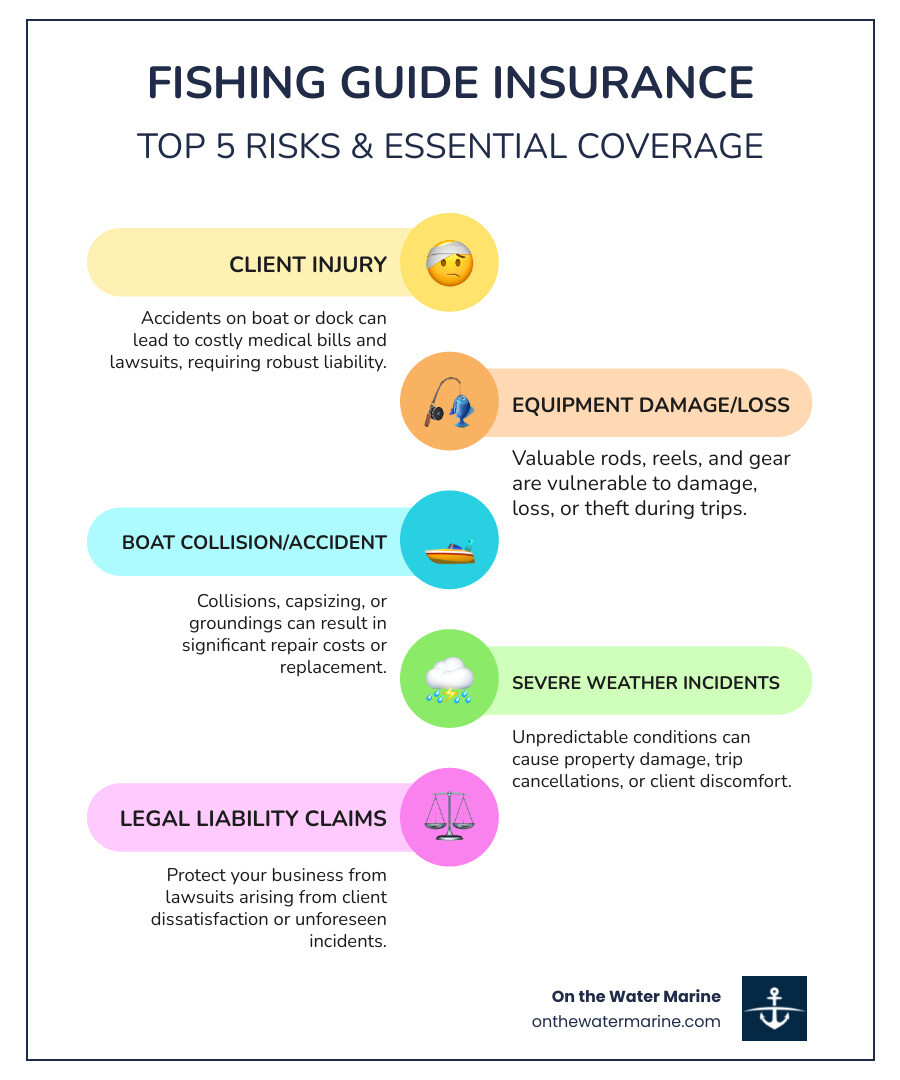
- Client Slips and Falls: A common risk on a wet deck or dock. Liability coverage can help with medical bills and legal fees if a client is injured.
- Equipment Failure: An engine failure can leave clients stranded. Specialized policies can cover mechanical breakdown, which is often excluded in standard boat insurance.
- On-Water Collisions: Accidents with other vessels can occur, causing damage to boats and injuries to passengers.
- Guest Injuries on the Dock: Liability isn’t confined to the boat. Dockside liability covers incidents like a client falling on a dock before even stepping aboard.
- Weather-Related Incidents: Sudden storms can lead to capsizing, grounding, or injuries. Your insurance can cover the consequences.
- Lost or Damaged Client Property: A client’s expensive camera or phone could go overboard. Some policies include coverage for their personal belongings.
- Food-Borne Illness: If you provide meals, there’s a risk of food-borne illness, which can lead to medical claims.
- Environmental Damage: A fuel leak can result in significant cleanup costs and penalties. Pollution liability is a critical component of marine insurance.
Core Coverages: What Your Fishing Guide Insurance Policy Should Include
Just as you need the right tackle, you need the right insurance. A comprehensive fishing guide insurance policy is your safety net, ensuring an unexpected event doesn’t become a financial disaster.

Your policy should be a robust combination of liability protection, property coverage, and optional endorsements customized to your operation.
Understanding Liability in your fishing guide insurance
Liability is the cornerstone of your policy, protecting you from the financial fallout if you’re found responsible for injury or damage.
- Protection & Indemnity (P&I): The gold standard for marine liability. It covers a broad spectrum of risks, including bodily injury, damage to other vessels, and pollution, often on an “occurrence basis” with no aggregate limit.
- Passenger Liability: This non-negotiable coverage is for injuries or death to your paying clients while under your care.
- Professional Angler Liability: An optional coverage for liabilities arising from activities like seminars, sport show appearances, or tournaments.
- Dockside & Shoreside Liability: Your liability extends beyond the boat. This covers injuries on docks during boarding or on land during activities like wade fishing.
- Non-Owned Vessel Liability: Protects you from liabilities when operating a vessel you don’t own, such as for a special event.
- Pollution Liability: Covers cleanup costs and fines from accidental fuel or oil spills from your vessel.
Understanding the nuances of marine liability is complex. For more information on navigating the waters of boating regulations and safety, check out our Boating Resources.
Protecting Your Vessel and Gear
Your boat and gear are your primary business assets. Losing or damaging them can bring your business to a halt.
- Hull & Machinery Coverage: Protects the physical structure of your boat (hull) and its propulsion system (machinery) from perils like collision, fire, and theft.
- Agreed Value vs. Actual Cash Value: With Agreed Value, you receive a pre-agreed amount if your boat is a total loss, regardless of depreciation. Actual Cash Value (ACV) pays the depreciated value. For a professional, Agreed Value is usually the best choice.
- Inland Marine for Equipment: This protects your moveable gear like tackle and electronics, whether it’s on the boat, stored ashore, or in your vehicle.
- Fishing Tackle Coverage: Provides specific, often higher-limit coverage for your expensive rods, reels, and lures. Homeowner’s policies typically won’t cover commercial gear.
- Trailer Coverage: Extends coverage to damage or theft of your boat trailer.
- Personal Property: Covers other personal items you bring on board, like coolers or rain gear.
To ensure your vessel is adequately protected, explore our comprehensive guide on Boat Insurance.
Essential Optional Coverages to Consider
A robust policy includes optional endorsements for an extra layer of protection.
- Medical Payments (MedPay): Covers minor medical expenses for clients, regardless of fault, which can help prevent small incidents from becoming large liability claims.
- Uninsured Boater Coverage: Protects you and your passengers if injured by an uninsured or underinsured boater.
- Towing & Emergency Assistance: Covers the cost of towing your disabled vessel to a repair facility.
- Tournament Fee Reimbursement: Reimburses non-refundable entry fees if an unforeseen event prevents you from competing in a tournament.
- Charter Legal Liability: If you book charters for other guides, this provides an additional liability umbrella over their policy.
- Business Interruption: Helps replace lost income and cover ongoing expenses if your boat is damaged and you can’t operate your business.
- Refrigerated Bait Coverage: For guides who rely on bait, this can cover spoilage due to refrigeration failure.
Decoding the Cost: Factors That Influence Your Premium
Understanding what drives the cost of your fishing guide insurance premium can help you make informed decisions. It’s not a random number; it’s a calculation based on your unique risk profile.
Several key factors come into play:
- Experience Level: Experienced guides with a proven track record of safe operations often receive better rates. Insurers look at your years in business and equivalent experience.
- Location & Waterway Type: Where you operate makes a big difference. Guiding in calm inland lakes presents different risks than navigating treacherous coastal waters. Your operating area directly impacts your premium.
- Claims History: A clean claims history is your best friend for lower insurance costs. A history of frequent or severe claims will lead to higher premiums.
- Coverage Limits: Higher liability limits (e.g., $1 million vs. $2 million) will increase your premium. However, many resorts and government agencies require high limits, as legal fees alone can be substantial.
- Deductibles: This is the amount you pay out-of-pocket before insurance kicks in. A higher deductible typically lowers your premium, but ensure it’s an amount you can comfortably afford.
- Vessel Type and Value: The make, model, age, and value of your boat are significant factors. A larger, more expensive vessel generally costs more to insure.
- Gross Annual Receipts: Your business’s gross receipts can determine eligibility for certain insurance programs.
- Number of Passengers: The more passengers you carry, the higher the potential liability risk, which can influence your premium.
Full-Time vs. Occasional Guide Coverage
Are there different types of fishing guide insurance for full-time vs. occasional guides? Yes. Insurers understand that a guide running daily charters has a different risk exposure than someone who guides a few times a month.
- Prorated Policies: For occasional guides, some providers offer policies or endorsements that reflect reduced operational time, so you aren’t paying for full-time coverage.
- Occasional Charter Endorsements: If you primarily use your boat for personal recreation but occasionally take out paying clients, an “occasional charter endorsement” can be added to a recreational policy to cover those commercial trips.
- Gross Receipts Limits: Some insurance programs have specific gross receipt thresholds, which can be a good fit for occasional guides with lower commercial income.
- Defining “Occasional Use”: The definition of “occasional” varies. Be clear with your broker about how frequently you guide to ensure you get the right coverage.
Whether you’re just starting out or expanding, getting a personalized quote is the best way to understand your options. You can start that process right here: Get A Quote.
Eligibility and Information Needed for a Quote
Getting an accurate quote for fishing guide insurance requires specific information. The more detail you provide, the more customized your quote will be.
Here’s what we typically need to gather:
- Years in Business/Experience: How long have you been a professional guide? Some insurers have minimum experience requirements.
- Captain’s License/Credentials: A valid Captain’s license (e.g., USCG OUPV or Master) is often a fundamental requirement. You can find more information from the U.S. Coast Guard National Maritime Center.
- Vessel Survey: For many commercial policies, an up-to-date marine survey may be required to confirm the vessel’s condition and value. We can guide you to resources like our Charter Self Survey page.
- Gross Annual Receipts: Your total commercial income from guiding operations.
- Operating Area: Be specific about where you guide, including states, bodies of water, and how far offshore you operate.
- Number of Passengers: The maximum number of paying clients you carry on your charters.
- Type of Fishing: Are you freshwater or saltwater? Fly fishing, deep-sea, or even ice fishing? The type of fishing can influence risks and equipment needs.
- Other Activities: Do you offer anything beyond fishing, such as scenic tours, eco-tours, or bird watching? Some activities may require an additional endorsement.
- Vessel Details: Full specifics on your boat, including make, model, year, length, engine type, and horsepower.
- Equipment Value: An estimated total value of your professional fishing tackle and other gear.
The Advantage of a Specialized Marine Insurance Broker
You might wonder if you can get this insurance online or from your local agent. While you could try, working with a specialized marine insurance broker like us offers distinct advantages that save you time, money, and headaches.
As independent marine insurance brokers, we shop multiple top-rated carriers to find the perfect fit for your needs. We don’t just offer one company’s product; we scour the market for you.
- Expert Guidance: We live and breathe marine insurance. Our team understands maritime law, the specific risks of guiding, and the complex jargon. We can explain terms like P&I and agreed value in simple language, which is invaluable when meeting permitting requirements for parks and waterways.
- Market Access: Many specialized fishing guide insurance policies aren’t available through general agents. We have access to niche programs designed for outfitters and guides, ensuring you get comprehensive coverage.
- Policy Customization: Your business is unique. We can tailor a policy to your exact specifications, whether you run a single skiff or a fleet of charter boats, covering all your activities.
- Claims Support: If the worst happens, we act as your advocate. We help you steer the claims process, ensuring fair treatment and a swift resolution.
- Understanding Marine Law: Marine insurance operates under a different set of laws. Our expertise ensures your policy is compliant and effective.
Our team of specialists can be the perfect partner for your operation. Our only goal is to ensure you are properly protected. If your current policy is the best one for your business, we will tell you.
To learn more about the benefits of partnering with a specialized broker, visit Why should I choose On The Water Marine Insurance?.
Conclusion: Secure Your Business and Fish with Confidence
Being a fishing guide is a passion, but it comes with unique risks that demand specialized protection. We’ve explored the critical differences between general business insurance and comprehensive fishing guide insurance, from broad P&I liability to hull protection and essential optional coverages.
Your business faces many challenges, from client slips to mechanical breakdowns. Without the right fishing guide insurance, one incident could jeopardize everything you’ve built, with legal fees potentially running into the hundreds of thousands.
Insurance is more than a requirement; it’s a smart investment in your future and your peace of mind. It allows you to focus on what you do best—guiding clients to incredible fishing experiences—knowing that you, your clients, and your assets are protected.
At On The Water Marine, we understand the marine world because we live it. We are dedicated to providing personalized service, expert guidance, and access to the specialized policies you need.
Don’t leave your livelihood to chance. Secure your business and fish with confidence.
Related Articles

Why Boat Detailing Businesses Need Specialized Insurance Coverage Boat detailing business insurance protects your company from unique risks, from damaging a client’s yacht to liability claims [...]
Why Best Florida Boat Insurance is Essential for Every Boater Best Florida boat insurance provides protection custom to the unique risks of boating in the Sunshine [...]
Why Boat Insurance Matters for Florida Boaters Boat insurance for Florida is not legally required by state law for most private vessels, but it’s essential financial [...]


