

Why Personal Watercraft Policies Matter for Marine Asset Protection
A personal watercraft policy is a specialized marine insurance contract designed to protect operators and owners of jet-driven watercraft—such as Jet Skis, WaveRunners, and Sea-Doos—against liability, physical damage, and other covered losses. Unlike homeowners insurance, which may provide minimal or no coverage for watercraft, a dedicated PWC policy addresses the unique risks associated with high-speed, inboard jet-drive vessels.
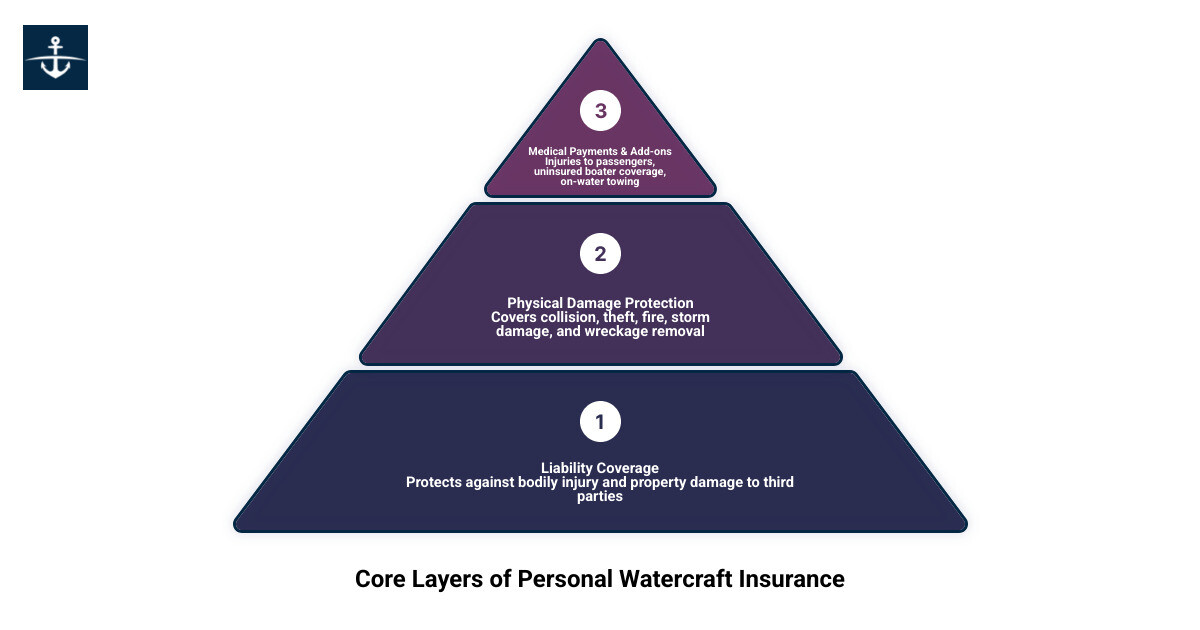
Core components of a personal watercraft policy typically include:
- Liability coverage for bodily injury and property damage to third parties
- Physical damage protection covering collision, theft, fire, and storm damage
- Medical payments for injuries to passengers and operators, often regardless of fault
- Uninsured boater coverage for incidents involving operators without adequate insurance
- On-water towing and assistance for breakdowns or emergency situations
Legal requirements vary by state. While most states do not mandate PWC insurance, many require minimum liability limits, and nearly all lenders and marinas require proof of coverage before granting access or financing. In North Carolina, for example, rented personal watercraft must carry at least $300,000 in liability insurance, and operators under 16 must complete a boating safety course.
Common exclusions and restrictions include:
- Performance modifications or high-speed racing use
- Operation after dark or outside specified navigation limits
- Damage to jet drives caused by ingestion of debris or water (in some policies)
- Gradual wear, mechanical breakdown, or osmosis
Most policies cannot be added to existing boat insurance. Personal watercraft require separate coverage due to their distinct risk profile, operational characteristics, and higher injury rates—80% of all PWC injuries and fatalities occur when two watercraft collide.
I’m Eric Fisher, founder and president of On The Water Marine Insurance, and I’ve spent over a decade working with marine risks, including personal watercraft policy structures, after transitioning from frontline water rescue work to marine insurance sales in 2013. This guide walks through the coverage layers, legal requirements, and policy exclusions that shape personal watercraft insurance decisions.
Understanding the Scope of a Personal Watercraft Policy
In many cases, owners of larger vessels assume that their tenders or personal watercraft (PWC) are automatically covered under their primary yacht policy. This is a common misconception that can lead to significant liability exposure. While some yacht policies allow for the addition of a tender, a high-performance PWC often requires its own dedicated personal watercraft policy to address its specific jet-propulsion risks and higher collision statistics.
The scope of these policies generally splits into two primary categories: risk mitigation for the owner’s assets and protection against third-party claims. Because these vessels are highly maneuverable and often operated in close proximity to other watercraft, the potential for a “hull-on-hull” incident is statistically high. In fact, eighty percent of all injuries and fatalities on personal watercraft occur when two units collide.
Depending on the carrier, you may find that What Does Boat Insurance Actually Cover? varies significantly between a standard boat and a PWC. For instance, the “jet drive” mechanism presents different mechanical risks than a traditional outboard or inboard engine. Furthermore, many owners ask, “Is My Boat Covered Under My Homeowners Policy?” The answer for PWCs is almost always a resounding no—or at the very least, the coverage provided is so limited in scope and value that it leaves the owner dangerously underinsured.

Liability and Medical Payments in a Personal Watercraft Policy
Liability is arguably the most critical component of any marine insurance contract. If an operator is found negligent in an accident that causes bodily injury or property damage to others, the financial consequences can be staggering. A robust personal watercraft policy provides a legal defense and helps cover settlements or judgments up to the policy limits.
FAQ: What Does Liability Boat Insurance Cover? typically includes:
- Bodily Injury: Coverage for medical bills and loss of income for third parties injured in an accident you cause.
- Property Damage: Coverage for damage to other vessels, docks, or even environmental structures.
- Legal Defense: The insurer often provides and pays for legal counsel to defend you against covered liability claims.
Medical payments coverage is a secondary but vital layer. This often pays for medical expenses for the operator and their passengers regardless of who was at fault. Limits can vary, with some specialized carriers offering up to $25,000 in medical payment coverage per occurrence.
Physical Damage and Specialized Protection in a Personal Watercraft Policy
Beyond the risk of hurting others, there is the risk of losing the asset itself. Physical damage protection covers the hull, engine, and often the trailer. This includes collision—hitting another boat or a submerged object—as well as comprehensive perils like fire, theft, and storm damage.
Specialized protections that are often overlooked until a claim arises include:
- Wreckage Removal: If a PWC sinks or is severely damaged, the cost to remove the debris from the water can be high. Many policies include this as part of the property damage liability.
- Fuel Spill Liability: Modern environmental regulations are strict. Am I Covered for Fuel Spills? is a question every owner should ask. Many policies bundle What is Fuel Spill Liability Coverage? into the property damage section to cover accidental discharge and cleanup costs.
- Personal Property: Some policies provide replacement cost coverage (up to specific limits like $10,000) for items on board, such as phones, sunglasses, or life jackets.
Legal Requirements and Operational Compliance
Navigating the legal landscape of PWC ownership requires an understanding of both state laws and private requirements. While it is true that only a few states mandate boat insurance for private owners, the reality of “required” insurance often comes from other sources.
If you finance your PWC, your lender will almost certainly require a personal watercraft policy that includes physical damage coverage to protect their collateral. Similarly, most high-end marinas will not allow you to dock or launch without providing proof of a minimum level of liability insurance.
State-specific regulations also play a role. For example, Boats and Personal Watercraft in Maryland are subject to specific safety rules, even if insurance isn’t legally mandated by the state. In North Carolina, the law is even more specific regarding rentals: a minimum of $300,000 in insurance must be carried on each PWC rented to the public.
Operational compliance is also a factor in maintaining your coverage. Most policies require that:
- The operator meets the state’s minimum age requirements (often 14 or 16).
- The operator has completed a mandatory boating safety course if required by their birth year.
- The PWC is registered appropriately with the local DMV or Department of Natural Resources.
Policy Exclusions and Navigation Limits
Understanding what a personal watercraft policy doesn’t cover is just as important as knowing what it does. Marine insurance is highly specific, and “all-risk” doesn’t mean “all-inclusive.”
Common exclusions often include:
- Performance Modifications: If you have modified your Sea-Doo or Jet Ski for increased speed or performance, you must disclose this. Many standard policies will exclude coverage for modified units.
- Racing: Use of the watercraft in an organized race or speed contest is a standard exclusion in almost every recreational policy.
- Night Operation: Because PWCs generally lack the navigation lights required for sunset-to-sunrise operation, accidents occurring after dark are frequently excluded.
- Mechanical Breakdown: Mechanical Breakdown – Are You Covered? is a common question. Generally, standard policies do not cover a blown engine due to wear and tear or lack of maintenance. However, FAQ: Does Boat Insurance Cover Mechanical Breakdown? reveals that some policies may cover it if the failure is due to a manufacturer’s defect or a covered peril.
- Ingestion Damage: A unique risk for PWCs is the ingestion of weeds, sand, or debris into the jet drive. Some policies explicitly exclude damage to the jet propulsion unit caused by ingestion.
Navigation Limits: Your policy will specify a geographic territory, such as “Coastal and Inland waters of the US and Canada.” If you take your watercraft outside these boundaries—for instance, crossing from Florida to the Bahamas—without a specific endorsement, you may find yourself without coverage.
Valuation Methods: ACV vs. Agreed Value
When a total loss occurs, how the insurance company calculates the payout is determined by the valuation method listed in your personal watercraft policy. This is where many owners find the most significant differences between carriers.
| Feature | Actual Cash Value (ACV) | Agreed Value |
|---|---|---|
| Depreciation | Applied to all losses | Not applied to total losses |
| Payout Amount | Market value at time of loss | Amount stated on the declarations page |
| Premium Cost | Typically lower | Typically higher |
| Best For | Older vessels or budget-conscious owners | New or high-value vessels |
Actual Cash Value policies factor in depreciation. If your five-year-old WaveRunner is stolen, the insurer will pay what a five-year-old unit is worth on the current market. Conversely, an Agreed Value policy pays the specific dollar amount you and the insurer agreed upon when the policy was written, regardless of market fluctuations. Some carriers also offer a “Replacement Cost” option for very new units (usually within the first 1-3 model years), which pays the MSRP for a new, similar model.
Understanding FAQ: What Does Boat Insurance Typically Cover? in the context of these valuation methods is essential for ensuring you can actually replace your vessel after a catastrophic event.
Frequently Asked Questions about PWC Policies
Can I add a PWC to my existing homeowners insurance?
While you may be able to add a small endorsement to a homeowners policy, it is rarely advisable for a modern PWC. Homeowners policies often have very low liability limits for watercraft and may only cover the unit while it is on your property. A specialized personal watercraft policy provides “on-water” protection, wreck removal, and fuel spill liability—features typically absent from a standard home policy. Is My Boat Covered Under My Homeowners Policy? explains these gaps in more detail.
Who is permitted to operate the watercraft under my policy?
Most policies allow for “permissive use,” meaning anyone you give permission to use the PWC is covered, provided they meet the age and safety requirements. However, some policies use a “Named Operator” endorsement, which restricts coverage only to the individuals listed on the policy. It is always wise to Check with your agent to confirm how your specific policy handles guest operators.
Does the policy remain in effect during winter storage?
Yes, most marine policies are 12-month contracts. Even if you live in a climate where the watercraft is winterized and stored, you still face risks like fire, theft, or building collapse. Some insurers offer a “lay-up” discount for the months the vessel is out of the water, but the policy remains in force to satisfy lender requirements and protect against non-operational risks. If you need assistance during the season, you should also verify if FAQ: Does Boat Insurance Cover On-Water Towing? applies to your specific coverage.
Conclusion
Securing the right personal watercraft policy is about more than just checking a box for a lender; it is about understanding the specific risks of jet-driven vessels and ensuring your financial assets are shielded from the unexpected. From navigating state-specific legal requirements to choosing between Actual Cash Value and Agreed Value, the nuances of marine insurance matter.
At On The Water Marine, we function as an independent brokerage, shopping multiple top-rated carriers to find the specific coverage that fits your lifestyle and vessel. We provide the expert guidance needed to navigate these complex policies, offering access to specialized programs that aren’t typically available through generic online portals.
If you are looking for a professional review of your current coverage or are preparing for a new purchase, we invite you to explore our Boat Insurance options. For complex marine risks or high-value assets, working with a specialist can help clarify your options and ensure you aren’t left with a “gap” when you need protection most.
Related Articles

What Is Commercial Marine Insurance — and Why It Matters for Your Business Commercial marine insurance is a category of specialized coverage designed to protect businesses [...]
What Florida PWC Owners Often Miss Until a Claim Happens Most insurance problems don’t show up when a policy is purchased — they show up after [...]
Why Personal Watercraft Insurance Costs Vary More Than You Think Most marine insurance issues don’t show up when a policy is bound — they show up [...]


